
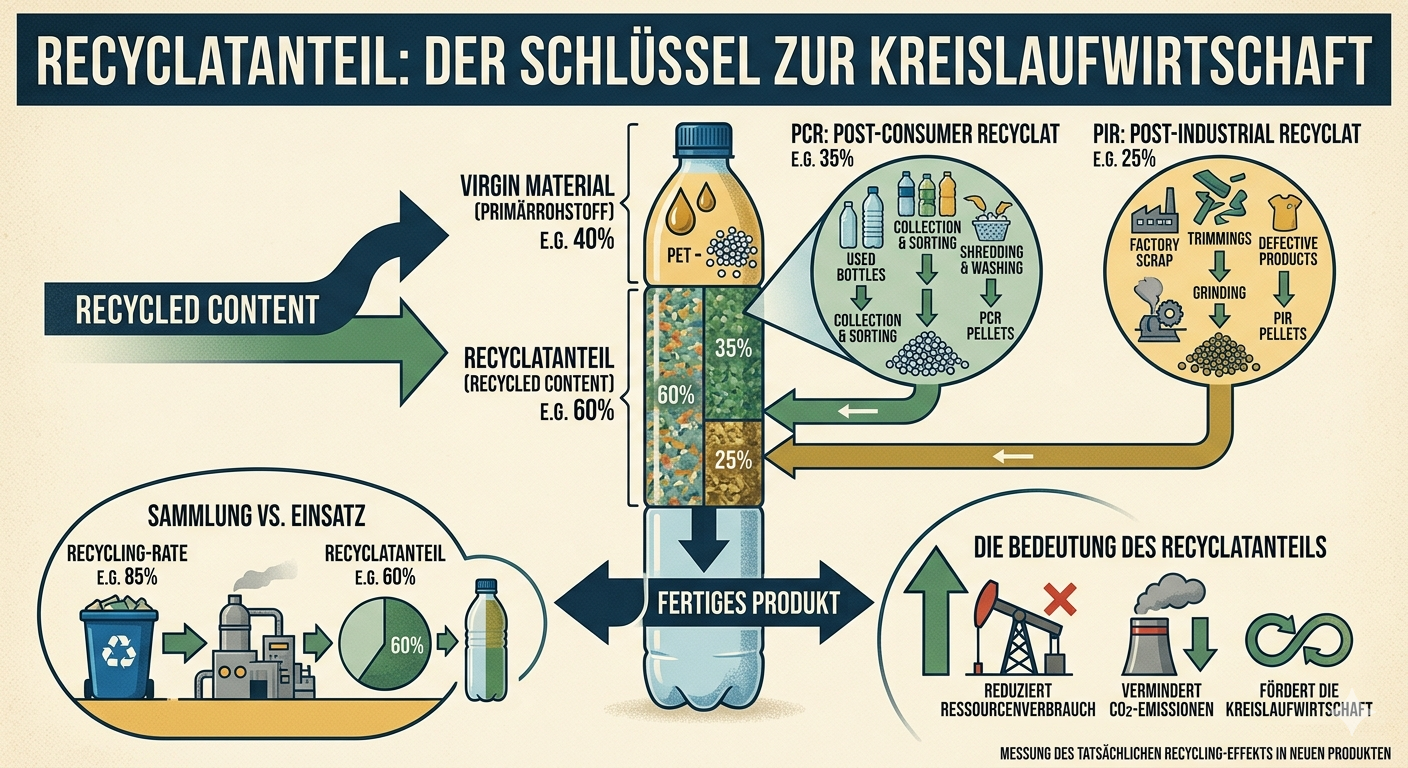
The term Recyclatanteil has become increasingly important in today’s world, where environmental concerns and resource scarcity are growing rapidly. Businesses, governments, and consumers are all looking for ways to reduce waste and use materials more responsibly. Recyclatanteil refers to the proportion of recycled materials used in a product or manufacturing process, making it a key indicator of sustainability.
As global demand for raw materials rises and waste production continues to increase, integrating recycled materials into production is no longer optional—it is essential. Understanding Recyclatanteil helps individuals and organizations make more informed, environmentally responsible decisions.
What Does Recyclatanteil Mean?
Recyclatanteil is a German term that translates to “recycled content share” in English. It represents the percentage of a product made from recycled materials rather than newly extracted raw resources.
Primary vs. Secondary Raw Materials
- Primary raw materials are extracted directly from nature, such as crude oil, minerals, or timber.
- Secondary raw materials, also known as recyclates, are recovered from previously used products and reprocessed for reuse.
A higher Recyclatanteil means fewer natural resources are consumed, contributing to a more sustainable production cycle.
Why Is Recyclatanteil Important?
1. Conservation of Natural Resources
Natural resources are finite. Increasing the Recyclatanteil reduces the need for raw material extraction, helping preserve ecosystems and biodiversity.
2. Lower Carbon Emissions
Producing goods from recycled materials often requires less energy compared to using virgin resources. This leads to reduced greenhouse gas emissions and helps combat climate change.
3. Waste Reduction
A higher Recyclatanteil means less waste ends up in landfills or incinerators, reducing environmental pollution and saving space.
4. Support for the Circular Economy
The concept of a circular economy revolves around keeping materials in use for as long as possible. Recyclatanteil plays a central role in achieving this by promoting reuse and recycling.
How Is Recyclatanteil Calculated?
Recyclatanteil is expressed as a percentage and calculated using a straightforward formula:
Recyclatanteil (%) = (Amount of recycled material / Total material used) × 100
Example:
If a product weighs 200 kg and 50 kg of it comes from recycled materials, the Recyclatanteil is 25%.
Challenges in Measurement
- Lack of standardized calculation methods
- Limited transparency in supply chains
- Mixing of recycled and virgin materials
These challenges can make it difficult to determine the exact percentage in some cases.
Recyclatanteil Across Different Industries
1. Packaging Industry
Packaging is one of the largest users of recyclable materials. Many companies are increasing their Recyclatanteil to meet regulatory requirements and reduce environmental impact.
2. Construction Sector
Recycled materials such as concrete, steel, and glass are widely used in construction. A higher Recyclatanteil helps minimize construction waste and resource consumption.
3. Automotive Industry
Modern vehicles increasingly incorporate recycled plastics and metals. This improves sustainability while maintaining performance and safety standards.
4. Textile Industry
Clothing and fabrics made from recycled fibers—such as recycled polyester from plastic bottles—are becoming more common, raising the overall Recyclatanteil in fashion.
Regulations and Policies
Governments worldwide are introducing policies to promote higher Recyclatanteil levels.
European Union
The EU has implemented strict recycling targets, especially for packaging materials. Companies must meet minimum recycled content requirements.
Global Trends
Countries around the world are adopting similar measures, encouraging industries to increase their use of recycled materials.
Benefits of High Recyclatanteil for Businesses
Cost Efficiency
Over time, recycled materials can become more cost-effective, especially as raw material prices fluctuate.
Stronger Brand Image
Consumers increasingly prefer eco-friendly products. A higher Recyclatanteil enhances brand reputation and customer trust.
Competitive Advantage
Companies that adopt sustainable practices early can stand out in the market and attract environmentally conscious customers.
Challenges and Criticism
Despite its benefits, increasing Recyclatanteil comes with obstacles:
1. Material Quality Issues
Recycled materials may not always match the quality of virgin materials, limiting their applications.
2. Technological Limitations
Not all materials can be easily or efficiently recycled, requiring innovation and investment.
3. Economic Barriers
In some cases, recycling processes can be more expensive than using new materials.
4. Greenwashing Risks
Some companies may exaggerate their Recyclatanteil without proper verification, misleading consumers.
Innovations Shaping the Future of Recyclatanteil
Advanced Recycling Technologies
New methods, such as chemical recycling, allow materials to be broken down and reused at a molecular level.
Digital Tracking Systems
Technologies like blockchain can improve transparency by tracking recycled content throughout the supply chain.
Design for Recycling
Products are increasingly being designed with recycling in mind, making it easier to recover and reuse materials.
How to Increase Recyclatanteil
For Businesses
- Use recyclable and recycled materials
- Optimize production processes
- Collaborate with recycling partners
For Consumers
- Choose products with higher recycled content
- Practice proper waste sorting
- Support sustainable brands
Conclusion: Recyclatanteil as a Path to Sustainability
Recyclatanteil is more than just a metric—it is a powerful tool for building a sustainable future. By increasing the use of recycled materials, we can conserve resources, reduce emissions, and minimize waste.
Both businesses and consumers play a crucial role in this transformation. While companies must innovate and adopt sustainable practices, individuals must make conscious purchasing decisions. Together, these efforts can drive the transition toward a circular economy where materials are continuously reused rather than discarded.
The growing importance of Recyclatanteil highlights a simple truth: sustainability is no longer a choice—it is a necessity.
Frequently Asked Questions (FAQs)
1. What does Recyclatanteil mean in simple terms?
It refers to the percentage of recycled materials used in a product.
2. Why is Recyclatanteil important?
It helps conserve resources, reduce emissions, and minimize waste.
3. How can I identify products with a high Recyclatanteil?
Look for labels or product descriptions indicating recycled content.
4. Is using recycled materials always better for the environment?
Generally yes, but it depends on the recycling process and energy use involved.
5. Which industries rely most on Recyclatanteil?
Packaging, construction, automotive, and textile industries are major users of recycled materials.