
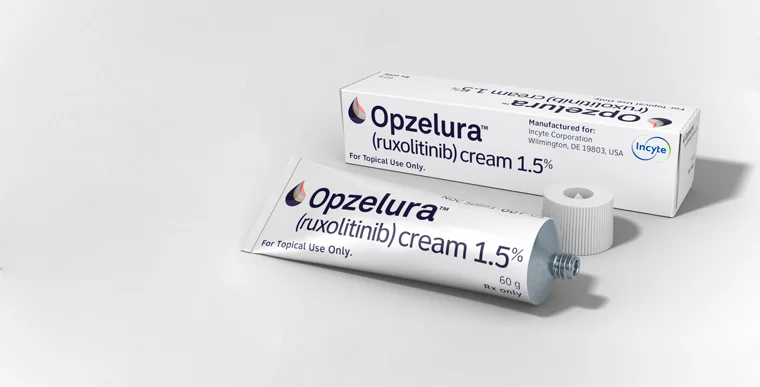
Many people who are prescribed Opzelura often ask the same question: Is Opzelura a steroid? The confusion is understandable because Opzelura is used to treat skin conditions commonly managed with corticosteroid creams. However, Opzelura works in a completely different way.
As newer treatments continue to enter the dermatology market, patients want safer and more effective options for long-term skin care. Traditional steroid creams have been widely used for decades, but concerns about skin thinning, dependency, and long-term side effects have pushed many people to look for alternatives. That is where Opzelura comes into the conversation.
This article explains everything you need to know about Opzelura, including whether it is a steroid, how it works, its uses, side effects, benefits, and how it compares with corticosteroid treatments.
Table of Contents
ToggleWhat Is Opzelura?
Opzelura is a prescription topical cream used to treat certain inflammatory skin conditions. The active ingredient in Opzelura is ruxolitinib, which belongs to a class of medications known as Janus kinase (JAK) inhibitors.
The medication is approved for treating:
- Mild to moderate atopic dermatitis (eczema)
- Nonsegmental vitiligo
Unlike traditional steroid creams, Opzelura targets specific immune pathways that cause inflammation and skin discoloration.
It is available as a topical cream and is applied directly to affected areas of the skin.
Is Opzelura a Steroid?
No, Opzelura is not a steroid.
Although it treats inflammatory skin conditions similarly to corticosteroid creams, Opzelura belongs to an entirely different category of medication called a JAK inhibitor.
Steroids work by broadly suppressing the immune system and reducing inflammation throughout the skin. Opzelura, on the other hand, blocks specific enzymes known as Janus kinases (JAK1 and JAK2), which are involved in inflammatory responses.
Because of this targeted mechanism, Opzelura may help reduce symptoms such as:
- Redness
- Itching
- Inflammation
- Skin discoloration
without causing some of the common steroid-related side effects.
How Does Opzelura Work?
To understand why Opzelura is not a steroid, it helps to understand its mechanism of action.
Inflammatory skin conditions like eczema and vitiligo involve overactive immune signaling in the body. Certain proteins send inflammatory messages that worsen itching, redness, and pigmentation loss.
Opzelura blocks these signals by inhibiting JAK enzymes.
This process helps:
- Calm skin inflammation
- Reduce itching
- Improve skin barrier function
- Restore skin pigment in vitiligo patients
Because the medication works on targeted immune pathways rather than suppressing the entire immune response, many dermatologists consider it a modern alternative to topical steroids.
Why Do People Confuse Opzelura With Steroids?
The reason many people ask, “Is Opzelura a steroid?” is because the medication treats conditions traditionally managed with corticosteroids.
For years, doctors prescribed steroid creams such as:
- Hydrocortisone
- Betamethasone
- Clobetasol
- Triamcinolone
These creams are commonly used for eczema, psoriasis, and dermatitis.
Since Opzelura also reduces inflammation and itching, patients naturally assume it belongs to the same category.
However, the biggest difference lies in how the medication works and its long-term safety profile.
Differences Between Opzelura and Steroid Creams
1. Drug Classification
Opzelura is a JAK inhibitor, while steroid creams are corticosteroids.
They belong to completely different medication classes.
2. Mechanism of Action
Steroids broadly suppress immune activity in the skin.
Opzelura specifically blocks JAK signaling pathways linked to inflammation.
3. Risk of Skin Thinning
One major concern with long-term steroid use is skin thinning, also called atrophy.
Opzelura does not typically cause skin thinning in the same way topical steroids can.
4. Sensitive Areas of the Body
Doctors are often cautious about prescribing strong steroid creams for areas such as:
- Face
- Eyelids
- Neck
- Groin
Opzelura may sometimes be preferred for these sensitive areas because it is nonsteroidal.
5. Long-Term Use
Steroids are usually limited to short-term use due to side effects.
Opzelura may offer a safer option for certain patients needing longer-term treatment under medical supervision.
Conditions Treated With Opzelura
Atopic Dermatitis (Eczema)
Eczema causes itchy, inflamed, dry, and irritated skin.
Opzelura helps reduce:
- Persistent itching
- Red patches
- Skin irritation
- Flare-ups
Many patients notice improvement within weeks of treatment.
Vitiligo
Vitiligo is a condition where skin loses pigment due to immune system activity attacking melanocytes.
Opzelura is one of the first topical medications specifically approved to help restore pigmentation in nonsegmental vitiligo.
Some patients experience gradual repigmentation over several months.
Benefits of Using Opzelura
Nonsteroidal Treatment Option
One of the biggest advantages is that Opzelura is not a steroid.
Patients who cannot tolerate corticosteroids may benefit from an alternative treatment.
Reduced Itching
Itching associated with eczema can become severe and disruptive.
Many users report fast itch relief after starting treatment.
Suitable for Delicate Skin Areas
Because it is nonsteroidal, Opzelura may be used on areas where steroids are often restricted.
Potential for Long-Term Management
Under professional guidance, Opzelura may help manage chronic skin conditions with fewer steroid-related concerns.
Possible Side Effects of Opzelura
Although Opzelura is not a steroid, it can still cause side effects.
Common side effects include:
- Redness at the application site
- Acne
- Mild burning sensation
- Nasal congestion
- Headache
- Itching
Less common but more serious risks may include immune-related complications because JAK inhibitors affect immune signaling.
Patients should always follow their healthcare provider’s instructions carefully.
Is Opzelura Safer Than Steroids?
Safety depends on several factors, including:
- Your medical history
- Severity of skin condition
- Duration of treatment
- Area being treated
For some patients, Opzelura may be safer than long-term steroid use because it avoids complications such as:
- Skin thinning
- Stretch marks
- Steroid dependency
- Discoloration caused by steroids
However, Opzelura also carries warnings and should only be used under medical supervision.
There is no universal “better” option. The best treatment varies from person to person.
Can You Use Opzelura With Steroids?
In some cases, dermatologists may combine treatments depending on the severity of symptoms.
However, patients should never mix medications without medical advice.
Combining immune-modulating treatments improperly can increase side effects or irritation.
Always speak with a healthcare professional before using Opzelura alongside corticosteroids or other prescription creams.
Who Should Avoid Opzelura?
Certain individuals may need extra caution before using Opzelura.
This may include people with:
- Active infections
- Weakened immune systems
- History of blood clots
- Certain cancers
- Serious liver disease
Pregnant or breastfeeding individuals should also consult their doctor before use.
How to Use Opzelura Correctly
For best results, patients should follow prescription instructions carefully.
General guidelines include:
- Apply a thin layer to affected skin
- Use only on prescribed areas
- Wash hands after application
- Avoid covering treated skin unless instructed
- Do not apply excessively
Using more cream than directed does not improve results and may increase risks.
How Long Does Opzelura Take to Work?
Results vary depending on the condition being treated.
For eczema:
- Some patients notice itch relief within days
- Visible skin improvement may occur within several weeks
For vitiligo:
- Repigmentation can take several months
- Consistent use is usually necessary
Patience and regular follow-up appointments are important during treatment.
Is Opzelura FDA Approved?
Yes. U.S. Food and Drug Administration approved Opzelura for specific dermatological conditions.
Its approval marked an important advancement in nonsteroidal topical treatments for inflammatory skin diseases.
The medication continues to gain attention because of its targeted treatment approach.
Common Misconceptions About Opzelura
“If It Treats Eczema, It Must Be a Steroid”
This is false. Many modern eczema treatments are now steroid-free.
“Nonsteroidal Means Completely Risk-Free”
No medication is completely without risk.
Even though Opzelura is not a steroid, it still requires careful medical supervision.
“Steroids and Opzelura Work the Same Way”
Both reduce inflammation, but they use entirely different biological pathways.
Should You Ask Your Doctor About Opzelura?
If you struggle with eczema or vitiligo and want alternatives to steroid creams, discussing Opzelura with your dermatologist may be worthwhile.
Questions you can ask include:
- Is Opzelura appropriate for my condition?
- Can it replace my steroid cream?
- What side effects should I watch for?
- How long should I use it?
- Is it safe for sensitive skin areas?
An individualized treatment plan is always the best approach.
Conclusion
So, is Opzelura a steroid? The answer is no.
Opzelura is a nonsteroidal prescription cream that belongs to a newer class of medications called JAK inhibitors. It works differently from traditional corticosteroids by targeting specific inflammatory pathways rather than broadly suppressing the immune system.
Its ability to treat eczema and vitiligo without many common steroid-related side effects has made it an important option in modern dermatology. While it is not completely free of risks, many patients appreciate having an alternative to long-term steroid use.
As with any prescription medication, Opzelura should only be used under the guidance of a qualified healthcare provider. Understanding how it works can help patients make more informed decisions about managing chronic skin conditions safely and effectively.
FAQs
1. Is Opzelura a steroid cream?
No, Opzelura is not a steroid cream. It is a topical JAK inhibitor used to treat eczema and vitiligo.
2. What is the active ingredient in Opzelura?
The active ingredient in Opzelura is ruxolitinib.
3. Can Opzelura thin the skin like steroids?
Opzelura does not typically cause skin thinning in the same way long-term steroid creams can.
4. What conditions does Opzelura treat?
Opzelura is approved for mild to moderate atopic dermatitis and nonsegmental vitiligo.
5. Is Opzelura safer than topical steroids?
For some patients, Opzelura may reduce risks linked to long-term steroid use, but safety depends on individual medical conditions and proper supervision.